


How Black entrepreneurship is redefining ownership, protection, and generational wealth in a new era of economic power
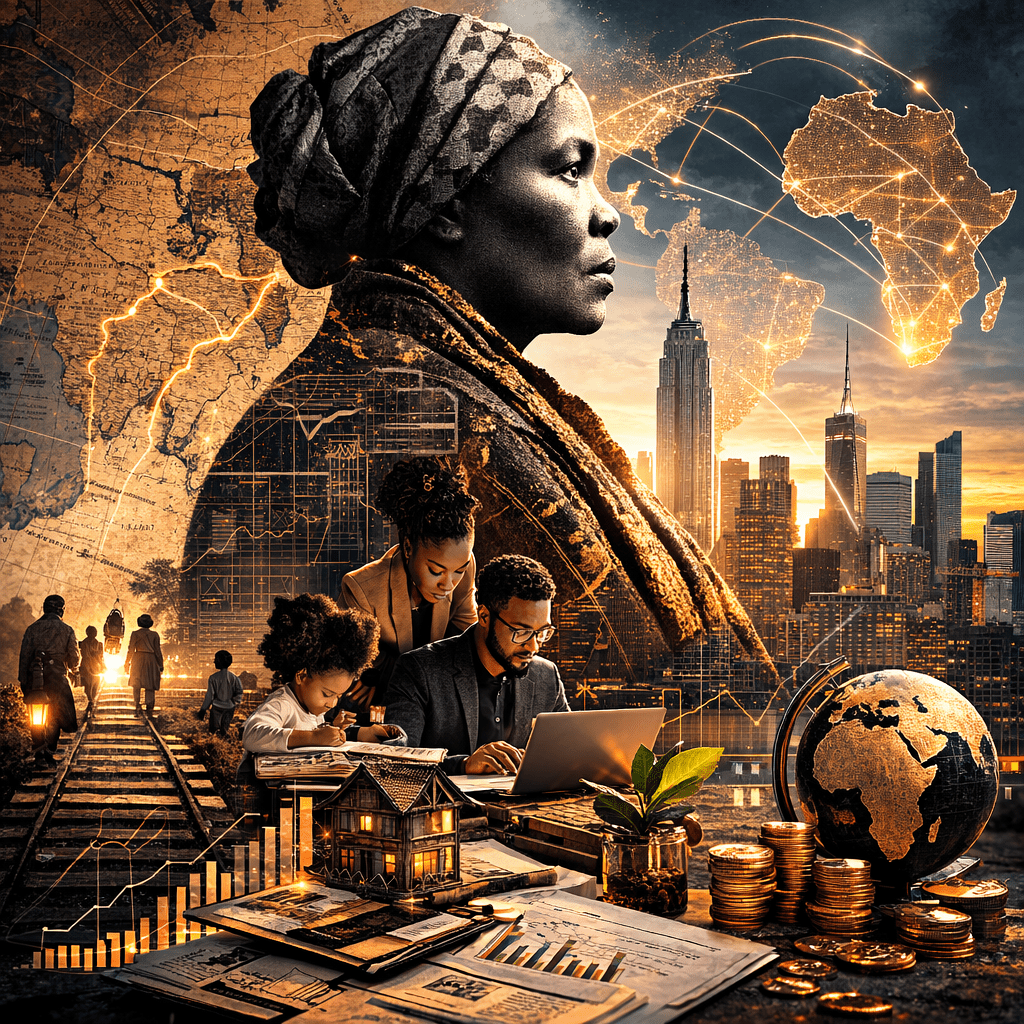
Black entrepreneurship is not just a modern movement. It is a continuation of a much older strategy rooted in survival, ownership, and economic resistance. Harriet Tubman did not just free people. She disrupted an economic system.
That distinction matters now because too many conversations about freedom stop at visibility or resilience without examining the structures that determine who is allowed to endure and who is allowed to accumulate.
Freedom Was Always an Economic Question
As an entrepreneur, that realization shifted something in me. I had been taught to admire Tubman’s courage. I had not been taught to study her strategy.
Slavery was not only a moral crime. It was a fully engineered economic machine. Cotton, sugar, railroads, insurance markets, and banking institutions all extracted value from stolen Black labor. Wealth was not incidental. It was designed.
The Underground Railroad was not symbolic. It was operational. It relied on intelligence networks, coordinated resources, risk assessment, and safe houses positioned with precision.
Freedom has always been an economic question.
Today, the constraints look different, but the system still exists. Venture capital exclusion. Persistent wealth gaps. Algorithmic bias. Underfunded founders. Families forced to restart at zero each generation.
If the Underground Railroad created pathways to physical freedom, then modern Black entrepreneurship is shaping pathways to economic autonomy.

Economic Liberation as Modern Resistance
The numbers are direct. The median white household holds nearly ten times the wealth of the median Black household, according to the Federal Reserve Survey of Consumer Finances. Black founders receive roughly one percent of total United States venture capital funding, based on analysis from Crunchbase.
Access to capital remains uneven, and when capital is uneven, permanence becomes rare. These disparities are not accidental. They are structural. Entrepreneurship in this context is not about hustle culture. It is about correction.
Black ownership disrupts economic dependency.
When Black entrepreneurs build, they are not only generating income. They are creating employment pipelines, establishing institutions, circulating capital within communities, and shifting control over land, equity, and narrative.
Ownership changes power. Power determines whether communities stabilize or remain vulnerable. What is emerging across the African Diaspora is a demand for something deeper than visibility. There is a desire for infrastructure. For systems that hold. For networks that protect.
We are connected digitally, but often building in isolation. This moment requires intention.
Entrepreneurship as Today’s Freedom Route
There is a difference between income and ownership. Income sustains the present. Ownership shapes the future. Income pays bills. Ownership transfers power.
Ownership shapes the future.
For generations, Black labor produced income for others while ownership remained out of reach. That imbalance is still visible today. Revenue is celebrated, but control is rarely examined.
In working with families on legacy planning, I have seen how quickly momentum disappears without structure. A founder builds something meaningful. The family moves forward. It feels stable until it is not.
An unexpected loss. A liability. No succession plan. No liquidity. No protection. Within months, everything dissolves. The cycle resets.
That is not a failure of ambition. It is a failure of design. Entrepreneurship without structure creates exposure.
Freedom without ownership is fragile. Ownership without protection is temporary.

Capital, Safe Houses, and the Third Renaissance
The Underground Railroad depended on safe houses. Protected spaces between danger and destination.
Modern economic liberation requires financial safe houses. Life protection, when structured correctly, is not a product. It is a safeguard. It ensures that one moment does not erase decades of work.
Nearly seventy percent of family owned businesses do not transition to the second generation. Ninety percent fail by the third. The issue is not vision. It is structure.
When approached strategically, financial planning becomes a tool for permanence. It creates liquidity, protects operations, enables succession, and supports long term capital growth.
Capital is not neutral. It moves toward power unless it is intentionally redirected.
At the same time, this movement extends beyond national borders.
Africa holds the youngest population in the world, according to the United Nations World Population Prospects. By 2050, one in four people globally will be African. The African Continental Free Trade Area represents one of the largest unified trade systems in modern history. Nations such as Kenya continues to emerge as a major technology hub, often referred to as Silicon Savannah.
The continent is not emerging. It is positioning.
The New Underground Railroad
Entrepreneurship today cannot be reduced to personal success. It is legacy work. Legacy is not about memory. It is about continuity. It is about creating systems strong enough to function without you and structures capable of protecting those who follow.
Permanence is not an idea. It is a system.
Harriet Tubman did not only guide people to freedom. She built routes others could rely on.
Today, those routes look different. They are written into operating agreements and ownership structures. They exist in insurance policies, trusts, cooperative funds, and institutions designed for durability. The first Underground Railroad moved people toward freedom. This one builds permanence. What we build now determines whether the next generation inherits struggle or infrastructure. This is the moment to move differently. If you are building, focus on structure.
If you are earning, translate income into ownership. If you are leading, design systems that outlast you. Start the conversations your family has avoided. Protect what you are building.
Position what you are building globally. Because the next version of freedom will not be granted. It will be constructed.