


Why Everyone Is Replacing Spa Appointments With High-Tech Rituals at Home
Luxury skincare is undergoing a quiet disruption, and it’s happening behind bathroom doors. In fact, consumer demand reflects the shift: searches for at-home skincare devices have surged by over 35% year-over-year, signaling a decisive move toward self-directed, results-driven routines.
In 2026, the question is no longer if you should book a facial, but whether you need to at all. With clinical-grade tools now engineered for at-home use, consumers are trading monthly appointments for daily precision. The result? A new era of skincare defined by autonomy, customization, and results that compound over time.
For the skincare-literate, the shift is undeniable. Today’s facial isn’t a service—it’s a system:
- Multi-step cleansing using varied textures to optimize skin renewal
- Gentler chemical exfoliants replacing harsh physical scrubs
- Targeted treatments addressing specific zones and concerns
This is not about instant glow. It’s about sustained transformation.
The Transformation Effect
The most compelling shift isn’t technological, it’s personal. Where once skin felt reactive, dull in winter, congested in summer, today’s routines are proactive. Within weeks of consistent at-home treatments, the difference becomes visible: texture softens, tone evens, and definition subtly returns to the face. It’s not the dramatic overnight change of a spa visit. It’s something more powerful; control. The ability to refine, sculpt, and maintain your skin on your own terms has redefined what luxury means in beauty.
From Lab to Vanity
The rise of at-home skincare is powered by clinical innovation meeting consumer accessibility. Three technologies are leading the movement: chemical peels, LED light therapy, and microcurrent devices.
Chemical Peels
Once reserved for professional settings, chemical peels have evolved into customizable treatments designed for diverse skin profiles.
Modern formulations allow users to target specific concerns with precision:
- Salicylic Acid: Clears congestion in oily, acne-prone skin
- Lactic Acid: Gently resurfaces sensitive or dry skin
- Glycolic Acid: Refines texture and boosts radiance
- Ascorbic Acid (Vitamin C): Brightens and corrects uneven tone
The result is controlled exfoliation—less aggressive, more intelligent, and increasingly personalized.
LED Light Therapy
LED technology has transitioned from dermatology offices into everyday routines, offering multi-wavelength treatments tailored to individual needs:
- Red Light: Stimulates collagen and improves elasticity
- Blue Light: Targets acne-causing bacteria
- Green Light: Reduces pigmentation and calms inflammation
What was once a clinical add-on is now a cornerstone of preventative skincare.
Microcurrent Therapy
Microcurrent devices use low-level electrical currents to activate facial muscles, delivering a lifting and toning effect often compared to a non-invasive facelift.
Unlike one-time treatments, at-home use builds results gradually. With consistent application; three to five times per week; skin appears firmer, more contoured, and visibly energized.
Devices like SKORR GLOW, developed by Dr. Anetta Reszko, reflect the next generation of skincare tools; combining micro-current stimulation with LED therapy in a single system. Designed to engage all 69 facial muscles, it represents a shift toward efficiency without compromising efficacy.
Technique remains essential. Begin with freshly cleansed skin, apply toner, and layer a hydrating, water-based serum. Skin must remain dewy throughout the process to ensure proper conductivity and glide. Within minutes, the face appears subtly lifted, sculpted, and refined.
The Cultural Shift: AI, Longevity, and Biohacking Beauty
This evolution isn’t happening in isolation; it mirrors a broader cultural movement.
Skincare is now part of the longevity conversation. Consumers are no longer treating skin as surface-level beauty but as a reflection of long-term health. The rise of biohacking has extended into beauty, where routines are optimized, tracked, and refined for maximum efficiency.
Artificial intelligence is beginning to shape this space as well; through personalized diagnostics, adaptive skincare recommendations, and predictive analysis of skin behavior.
The result is a more informed, more intentional approach to self-care; one that values data as much as ritual.
View this post on Instagram
The Routine That Replaces the Facial
For those looking to replicate spa-level results at home, consistency and structure are everything. The most effective routines are simple, repeatable, and results-driven:
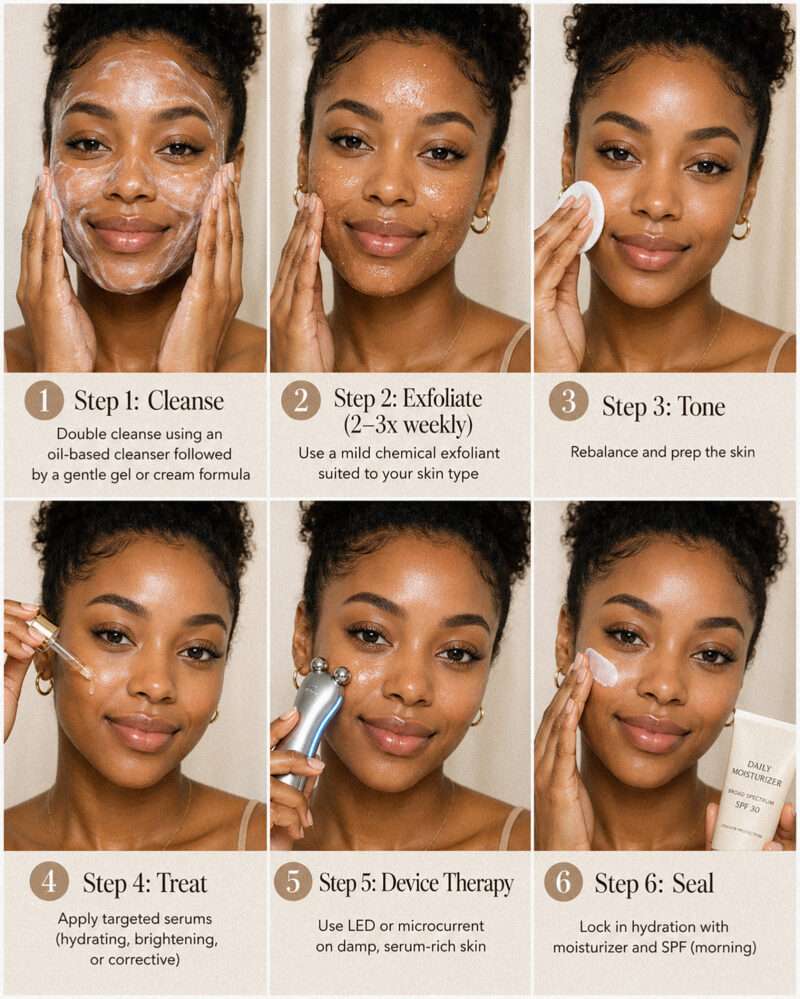
This isn’t about excess; it’s about intention. Done consistently, this routine becomes more than maintenance; it becomes transformation.
The Main Takeaway
Technology may be redefining skincare, but it hasn’t replaced its essence. Traditional practices; gua sha, facial massage, the human touch of an esthetician; still hold irreplaceable value. They offer something technology cannot replicate: intuition, connection, and care. Yet the ability to perform a full, results-driven facial at home; on your own time; signals a new kind of luxury. It’s not just about access. It’s about control. In 2026, skincare isn’t just smarter. It’s yours.
- The Truth About DIY Skincare: What Works vs. What Harms


